EN




What Is a Roll-On Ball? How It Controls Dispensing
 2026-10-02
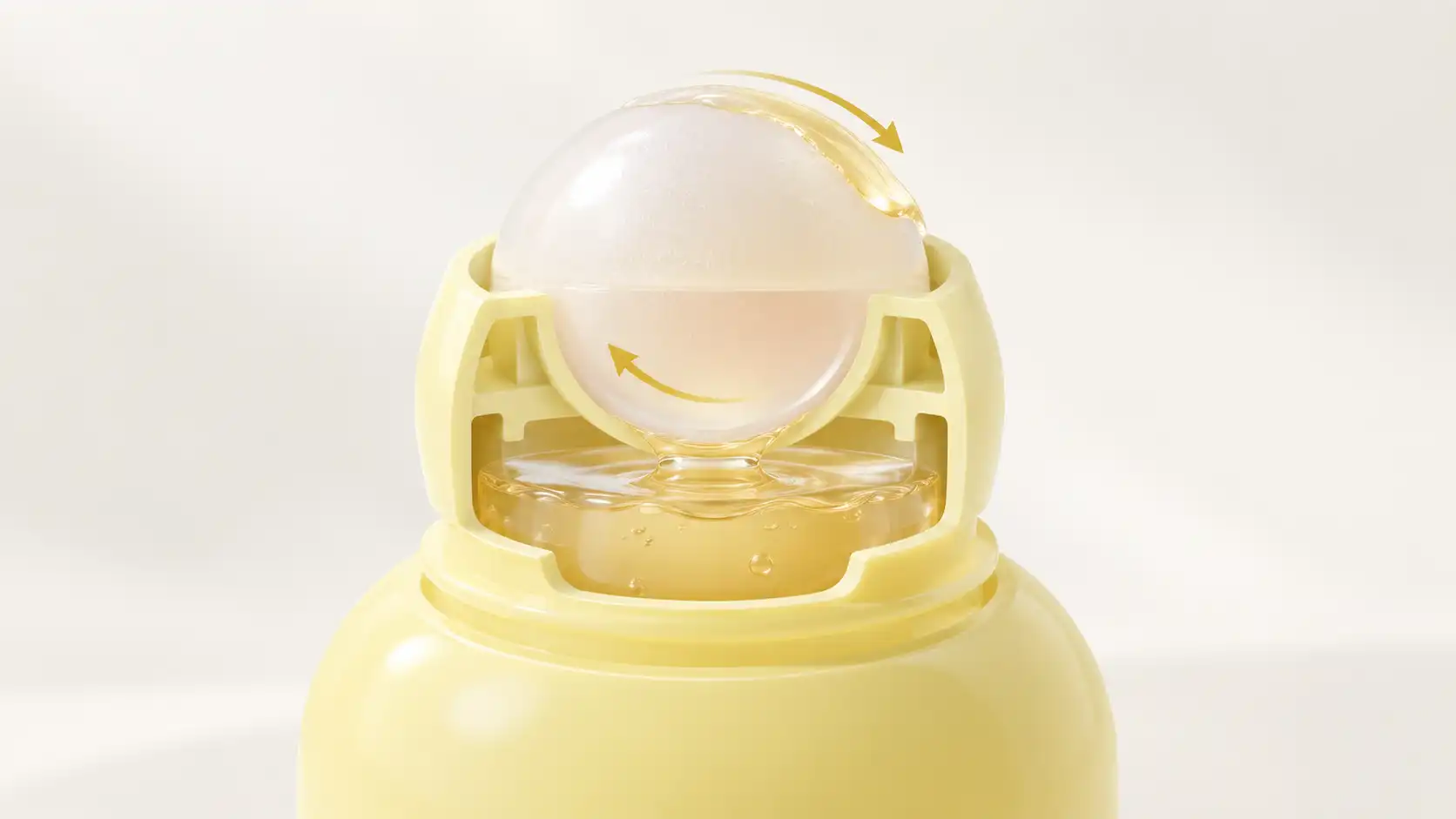
A roll on ball is more than the visible applicator at the top of a deodorant, serum, perfume, or personal care package. It is a moving part of a dispensing system that works together with the housing or fitment, bottle, cap, and product formula.
When the ball rotates, product from inside the package wets its surface and is carried toward the application area. However, the amount dispensed depends on more than rotation alone. Ball diameter, ball-to-housing clearance, roundness, surface friction, formula viscosity, and sealing dimensions all influence how smoothly and consistently the system works.
For packaging buyers and product developers, understanding these relationships is important because the same roll-on ball can perform differently when the formula or surrounding components change.

What Is a Roll-On Ball?
A roll-on ball is a spherical applicator retained inside a housing or fitment at the opening of a bottle. The ball must be held securely while remaining free enough to rotate during use.
A standard roll-on packaging system commonly includes four components:
-
Bottle
-
Roll-on ball
-
Housing or fitment
-
Cap
Hongda’s product documentation identifies plastic, PET, and glass bottles as common packaging formats, while roll-on balls can be produced from materials such as PP plastic or stainless steel.
The ball is therefore not an independent dispensing component. Its performance depends on its dimensional relationship with the housing and bottle neck. Buyers sourcing separate components should evaluate roll-on balls and fitments as a matched system rather than selecting each part only by nominal size.
How Does a Roll-On Ball Dispense Product?
The dispensing process looks simple from the outside, but several actions happen at the same time.
Product Reaches the Inside Surface of the Ball
When the package is tilted, inverted, or used in its intended orientation, the formula moves toward the ball. In some structures, bottle flexibility and user pressure may also influence how product reaches the applicator area.
The formula then contacts the inner portion of the ball.
The Ball Rotates Inside the Housing
As the user moves the applicator across the skin or another surface, friction causes the ball to rotate inside the housing.
The ball must rotate freely enough to transfer product but remain closely controlled by the surrounding fitment. If the fit is too tight, rolling resistance can increase. If it is too loose, the system may allow excessive product flow or create a higher leakage risk.
Product Moves With the Ball Surface
As the ball turns, the section that was in contact with the formula rotates outward. A film of product on the ball surface is then transferred to the skin.
In complete roll-on bottle packaging, the bottle stores and feeds the formula, the housing retains and positions the ball, and the rotating ball acts as the final application surface.
What Controls How Much Product a Roll-On Ball Dispenses?
Dispensing volume is determined by a combination of dimensional, mechanical, and formulation variables.
| Factor | If Poorly Matched | Main Result |
| Ball-to-housing clearance | Too tight or too loose | Low output, excessive output, or leakage |
| Formula viscosity | Too thin or too thick for the structure | Unstable dispensing |
| Ball diameter | Incorrectly matched to housing geometry | Changed flow and rolling behavior |
| Ball roundness | Uneven ball-to-housing gap | Inconsistent rotation |
| Surface friction | Excessive rolling resistance | Poor application feel |
| Housing dimensions | Incorrect retention or flow path | Dispensing and sealing problems |
Ball-to-Housing Clearance
Clearance is one of the most important variables in a roll-on dispensing system.
If the space between the ball and housing is too small, the ball may become difficult to rotate or may even jam. Product may also have difficulty moving through the dispensing path.
If the clearance is too large, more formula can pass around the ball, increasing the possibility of excessive dispensing or leakage.
Hongda’s technical knowledge specifically treats ball diameter, housing diameter, rolling resistance, dispensing volume, and formula viscosity as interconnected validation items rather than independent specifications.
Formula Viscosity and Flow Behavior
A roll-on package that works well with one formula may not work the same way with another.
Hongda’s testing guidance notes that packaging performance can be affected by viscosity, flowability, surface tension, chemical composition, and temperature. A package that passes a simple water test therefore cannot automatically be assumed to work with the customer’s actual formula.
A low-viscosity product may move through the dispensing gap more easily, while a more viscous serum or lotion may require a different ball-and-housing relationship to achieve acceptable transfer.
Ball Diameter and Roundness
Ball diameter also affects the geometry of the dispensing system.
However, a larger ball should not automatically be interpreted as providing more product. Ball size must be considered together with the housing dimensions, clearance, product viscosity, and intended application area.
Roundness is equally important. If the ball is not sufficiently spherical, the gap between the ball and housing may vary as it rotates. That can affect both rolling consistency and dispensing.
For this reason, Hongda includes ball roundness testing as part of its quality-control process.
Why Can the Same Roll-On Ball Dispense Differently With Different Formulas?
One of the most common mistakes in roll-on packaging development is assuming that a successful ball and housing combination can be transferred directly to another formula.
Consider three simplified situations.
A thin formula may flow easily into the dispensing area. If the clearance is relatively large, the applicator may become excessively wet or present a higher leakage risk.
A medium-viscosity formula may produce stable rolling and product transfer with the same structure.
A highly viscous formula may wet the ball more slowly, require greater movement to transfer product, or create higher rolling resistance if the formula accumulates around the housing.
This is why the more useful sourcing question is not simply:
“Which roll-on ball is best?”
It is:
“Which ball, housing, clearance, and material combination works with this specific formula?”
Testing should therefore use the actual formula whenever possible.
How Do Roll-On Ball Materials Affect Performance?
Material selection influences weight, touch, mechanical behavior, and the overall user experience, but material alone does not determine dispensing volume.
Plastic Roll-On Balls
PP is widely used for roll-on balls. Hongda supplies both hollow and solid plastic ball structures in multiple diameters. Its documented hollow PP ball range includes numerous sizes from small applicator balls through larger deodorant formats.
Hollow balls can reduce material use and component weight, while solid balls have a simpler structure but typically use more material. Regardless of structure, the ball must still be tested together with the housing and formula.
Stainless Steel Roller Balls
Stainless steel roller balls are commonly selected when brands want a heavier, cooler application feel.
Hongda’s documentation notes that stainless steel balls are often used for serums, eye care, massage products, and premium personal care applications.
However, changing from plastic to stainless steel can also change the mechanical relationship within the applicator. The complete system should therefore be revalidated rather than assuming identical dispensing behavior.
What Causes Too Much, Too Little, or Uneven Dispensing?
Dispensing problems are often caused by several interacting factors rather than a single defective component.
| Problem | Possible Causes |
| Too much product | Excessive clearance, low-viscosity formula, dimensional variation |
| Too little product | Tight clearance, high viscosity, poor ball wetting |
| Ball does not roll smoothly | Tight fit, housing deformation, residue, crystallization |
| Leakage around ball | Clearance mismatch, bottle-neck mismatch, assembly or formula issues |
Hongda’s quality guidance identifies common leakage causes including thin formulas, incorrect clearance between the roll-on ball and housing, poor fit between the housing and bottle neck, out-of-tolerance dimensions, incomplete press-fitting, excessive filling volume, temperature or pressure changes, and material compatibility problems.
Similarly, poor rolling can result from excessive formula viscosity, an overly tight ball-to-housing fit, fitment deformation, crystallized product, incorrect assembly, or dried formula after storage.
These problems should therefore be investigated as system-level issues.
How Should Buyers Test a Roll-On Dispensing System Before Mass Production?
A satisfactory appearance sample is not enough to confirm dispensing performance.
Before mass production, buyers should evaluate the package with the actual filling formula and under conditions that represent expected use, storage, and transportation.
Important validation areas include:
-
Ball diameter and roundness
-
Housing inner diameter and lip geometry
-
Rolling resistance
-
Dispensing volume
-
Different application angles and pressures
-
Horizontal and upside-down storage
-
Temperature cycling
-
Vibration and drop conditions
-
Closure and opening torque
-
Formula-material compatibility
-
Assembly and press-fitting performance
Hongda’s technical guidance recommends evaluating rolling resistance, dispensing volume, sealing, temperature performance, transport conditions, compatibility, and assembly within one validation matrix.
For new projects, component matching and engineering support can help determine whether the selected ball, housing, bottle, and formula are suitable as a complete dispensing system before production is scaled up.
How Hongda Supports Stable Roll-On Dispensing
Hongda Plastics has focused on roll-on packaging since 2003 and supplies complete packaging sets as well as individual bottles, balls, housings, and caps.
Supplying multiple components within one system can reduce matching risks between parts sourced from different manufacturers. Hongda’s technical experience also covers formula viscosity, leakage, rolling resistance, packaging matching, ball roundness, and pressure testing.
For buyers, the objective is not simply to find a ball that rotates. The goal is to build a dispensing system that rolls smoothly, releases an appropriate amount of product, remains sealed during storage, and performs consistently in mass production.
FAQs
Q1: What Is a Roll-On Ball Used For?
A: A roll-on ball is used to transfer liquid or semi-liquid products from a container to an application surface. Common applications include deodorants, perfumes, serums, essential oils, eye care products, and other personal care formulations.
Q2: How Does a Roll-On Ball Control Product Flow?
A: The ball rotates inside a housing while formula passes through a controlled clearance around the ball. Product flow therefore depends on the relationship between ball dimensions, housing geometry, rolling resistance, and formulation properties.
Q3: Does a Larger Roll-On Ball Dispense More Product?
A: Not necessarily. Ball diameter changes the geometry of the applicator, but dispensing volume also depends on housing dimensions, clearance, viscosity, surface behavior, and application conditions.
Q4:Why Does a Roll-On Ball Stop Rolling Smoothly?
A: There are many possible causes for a stuck ball. These include excessive formula viscosity (too thick) or an overly tight ball-to-housing clearance. You might have fitment deformation (bent plastic), crystallized or dried formula acting like glue, dimensional variation, or just incorrect factory assembly.
Q5:Should Roll-On Packaging Be Tested With the Actual Formula?
A: Yes. Testing with the actual formula is strongly recommended by experts. Liquid viscosity, flowability, surface tension, chemical composition, and room temperature can radically change dispensing and sealing behavior. A successful plain water test alone does not confirm compatibility with the final product formula.
If you are developing a brand new formula, please reach out. If you are experiencing unstable rolling, excessive dispensing, or messy leakage, get some help. Discuss your roll-on packaging project with experts before finally confirming your mass-production specifications.