EN




What Is a Roll-On Bottle? Components, Working Principle, and Common Uses
 2026-10-09
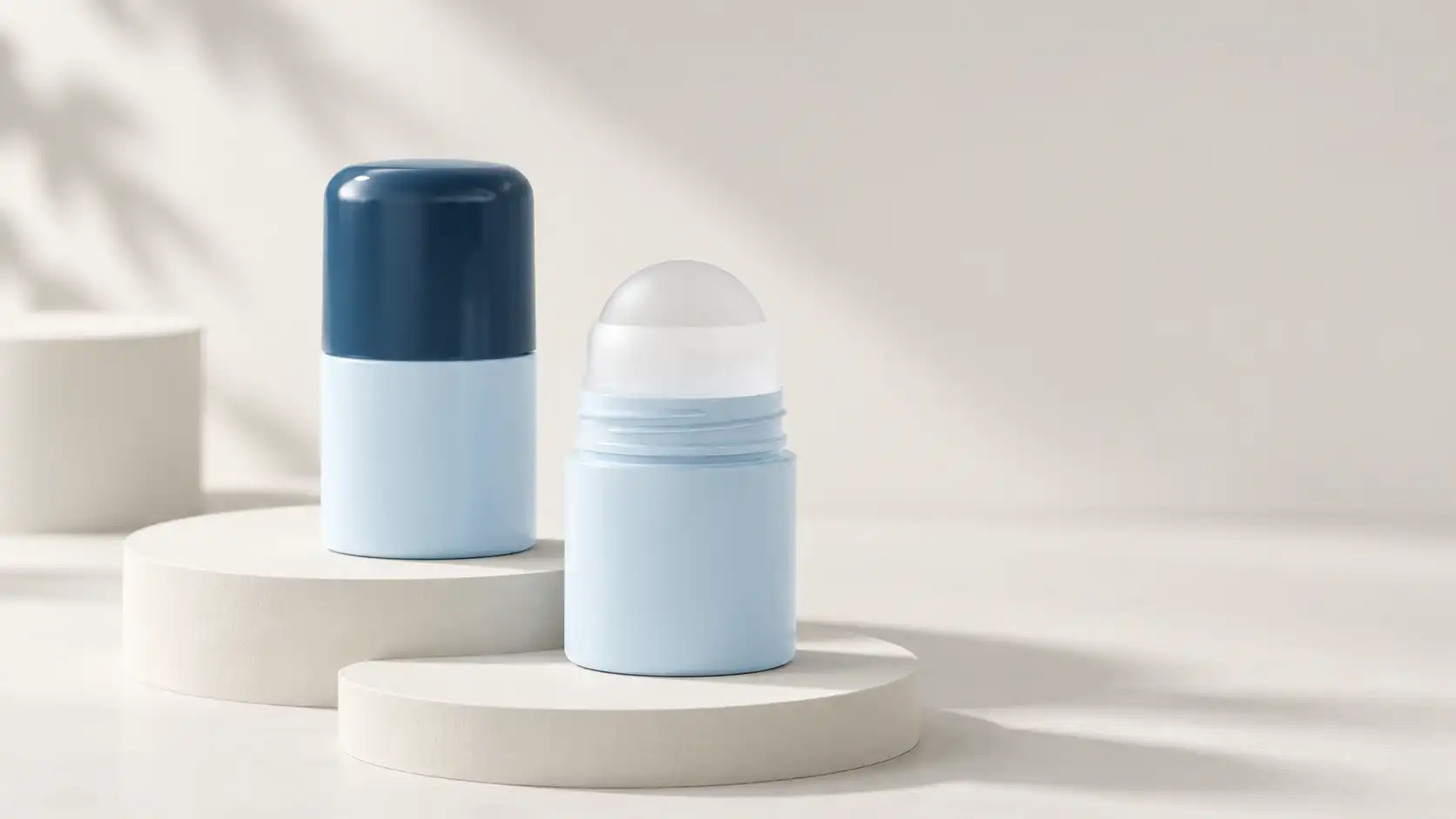
A roll-on bottle is a packaging format that uses a rotating ball to apply liquid or semi-liquid products directly to the skin or another target surface. It is commonly used for deodorants, perfumes, essential oils, serums, eye care products, and other personal care formulas.
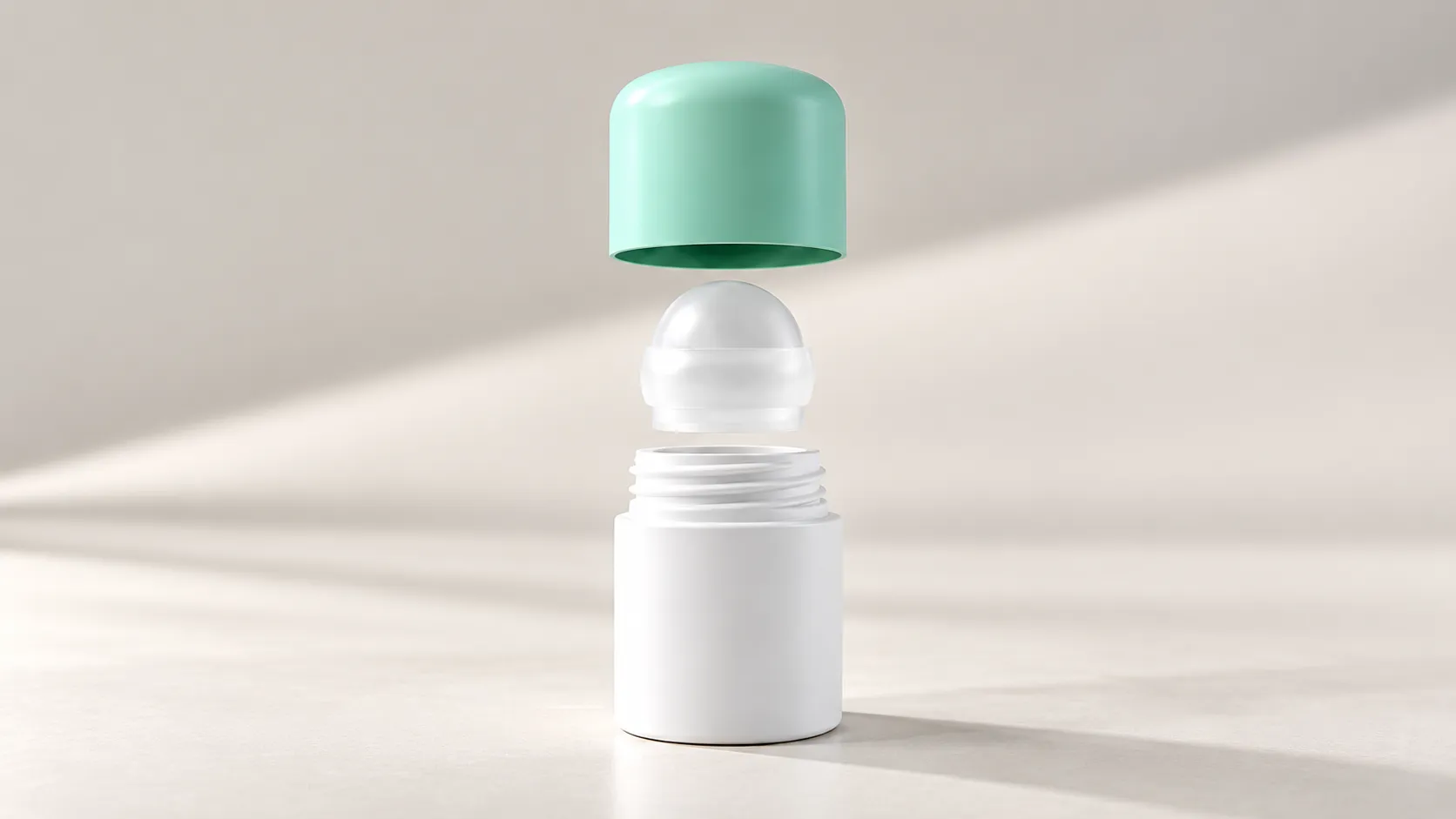
Unlike a simple open container or a messy jar, a roll-on bottle actually works as a complete application system. A standard structure usually includes a main bottle, a round roll-on ball, a plastic housing or fitment to hold it, and a top cap. All these parts work closely together as a team. They store the wet formula safely inside. They retain the ball so it doesn’t fall out. They support smooth, easy application on your skin. Finally, they keep the whole package closed tight during drawer storage.
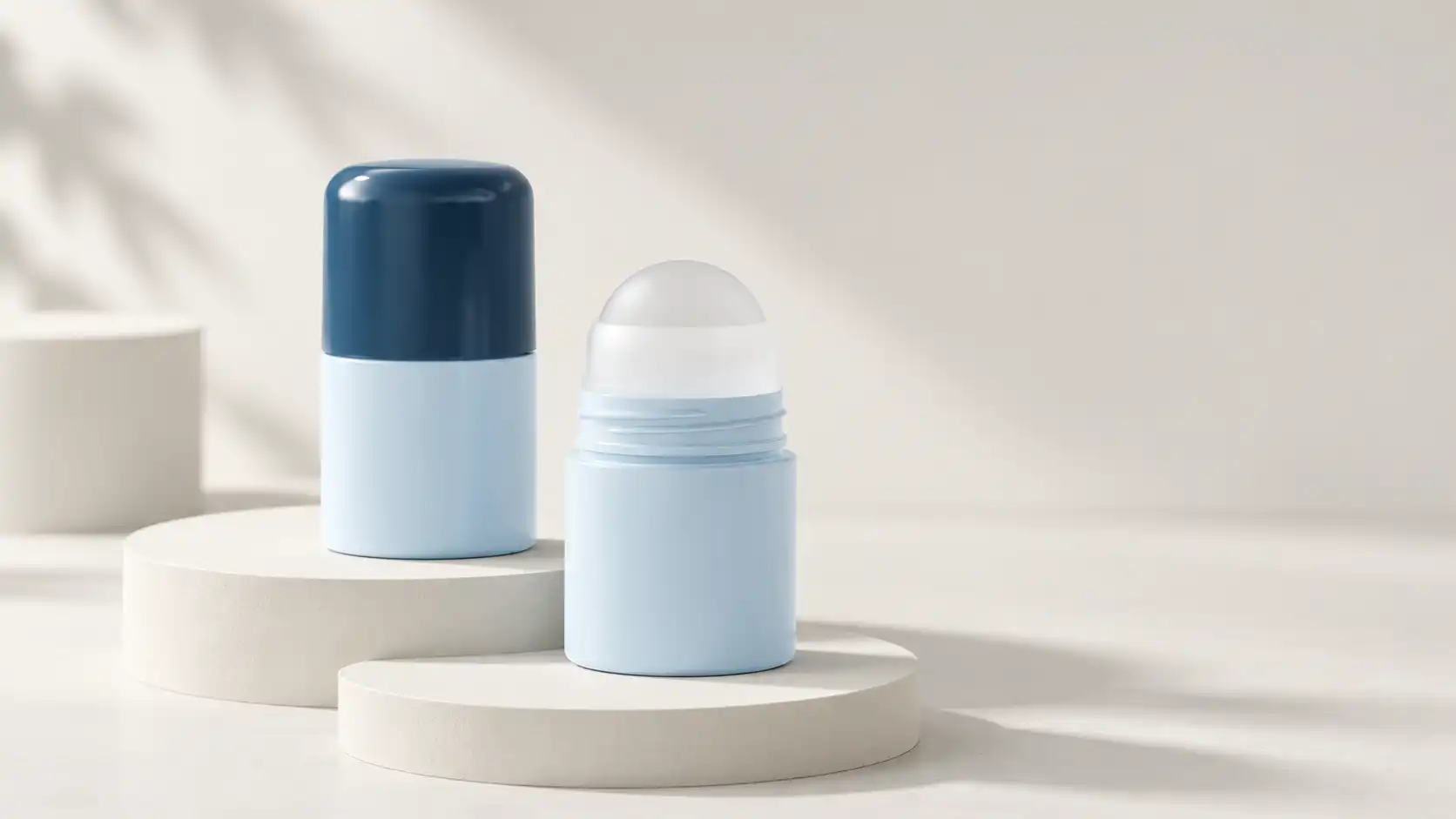
What Is a Roll-On Bottle?
A roll-on bottle is a container fitted with a spherical applicator at its opening. When the applicator is moved across the skin, the ball rotates and transfers a thin layer of formula from inside the bottle to the application surface.
This design combines storage and application in one package. Unlike a dropper or spray bottle, the user can apply the formula directly without first dispensing it into the hand.
Roll-on packaging is available in different capacities, materials, bottle shapes, and applicator configurations. Buyers can compare available roll-on bottle formats according to the formula, market positioning, application area, and required filling volume.
What Are the Main Components of a Roll-On Bottle?
A typical roll-on package contains four main parts.
Bottle
The bottle is the reservoir that stores the formula. Common materials include PP, PE, PET, and glass. Material choice affects weight, appearance, flexibility, decoration options, and transportation. The bottle neck must also match the selected housing or fitment.
Hongda’s product documentation lists plastic, PET, and glass as major roll-on packaging categories, with specific material combinations varying by model and drawing.
Roll-On Ball
The ball is the application component that contacts the skin. During use, it rotates inside the housing and carries formula from inside the package to the outside surface.
Roll-on balls are available in different diameters and materials, including plastic and stainless steel. For a deeper explanation of how diameter, housing interaction, and formula properties affect output, see the related guide on roll-on ball dispensing behavior.
Housing or Fitment
The housing, also called a fitment, holds the ball in position while allowing it to rotate. It also connects the ball assembly to the bottle neck.
Because the ball and housing work as a pair, buyers sourcing components separately should evaluate roll-on balls and fitments together rather than by nominal size alone.
Cap
The cap protects the applicator and closes the package during storage and transportation. In some designs, the cap also contributes to the final sealing condition when fully closed.
How Does a Roll-On Bottle Work?
The working principle is straightforward.
The formula is stored inside the bottle. When the package is tilted, inverted, or used in its intended orientation, the product reaches the inner side of the applicator ball.
As the user moves the ball across the skin, friction causes it to rotate. The section of the ball that contacted the formula moves outward and transfers a thin film of product to the skin.
The process can be summarized as:
Formula inside bottle → formula reaches ball → ball rotates → product moves to outer ball surface → formula transfers to skin
The roll-on bottle should therefore be viewed as both a container and an applicator. Exact dispensing behavior depends on the specific bottle, ball, housing, and formula combination.
What Types of Roll-On Bottles Are Available?
Roll-on bottles can be classified by material, capacity, orientation, and structural design.
Plastic Roll-On Bottles
Plastic roll-on bottles are widely used for deodorants and personal care products. PP and PE are common materials, offering low weight and flexible options for bottle shape, color, and structure.
They are often suitable for projects where lighter packaging, large-volume production, and appearance customization are priorities.
PET Roll-On Bottles
PET roll-on bottles provide greater transparency and can create a more glass-like appearance while remaining lighter than glass.
Hongda’s product range includes PET roll-on packaging in multiple capacities and ball diameters.
PET can therefore suit brands that want a clear or premium-looking package without moving directly to glass.
Glass Roll-On Bottles
Glass roll-on bottles are commonly used for perfumes, essential oils, serums, and other products where a more premium appearance is preferred.
Hongda’s documented glass range includes multiple bottle capacities and ball sizes.
The main trade-offs are higher package weight and greater breakage risk during transportation.
Different Capacities and Structures
Small-capacity roll-ons are common for perfume, essential oils, eye care, and targeted serum applications, while larger bottles are often used for deodorants and body-care products.
Hongda’s range includes small formats as well as larger 50 ml, 60 ml, 75 ml, and 90 ml options.
Some designs are also intended for upside-down storage, keeping the formula in continuous contact with the ball. This can make dispensing easier but places higher requirements on sealing and compatibility, so long-term upside-down testing is recommended before mass production.
Replaceable roll-on bottle structures are also available for projects exploring reusable or refill-oriented concepts.
What Materials Are Commonly Used for Roll-On Bottles?
Material selection usually starts with the formula, appearance target, logistics, and brand positioning.
| Material | Typical Characteristics | Common Considerations |
|---|---|---|
| PP / PE | Lightweight and flexible | Structure, color, formula compatibility |
| PET | Transparent and lighter than glass | Appearance and compatibility |
| Glass | Premium feel and visual quality | Weight and breakage risk |
Hongda’s selection guidance notes that plastic bottles are relatively lightweight and flexible for color and structural customization. PET provides good transparency and a glass-like appearance while remaining lighter. Glass offers a more premium feel but increases transportation weight and breakage risk.
There is no single material that is best for every project. The right choice depends on the formula, market, appearance, filling process, and logistics.
What Are Roll-On Bottles Commonly Used For?
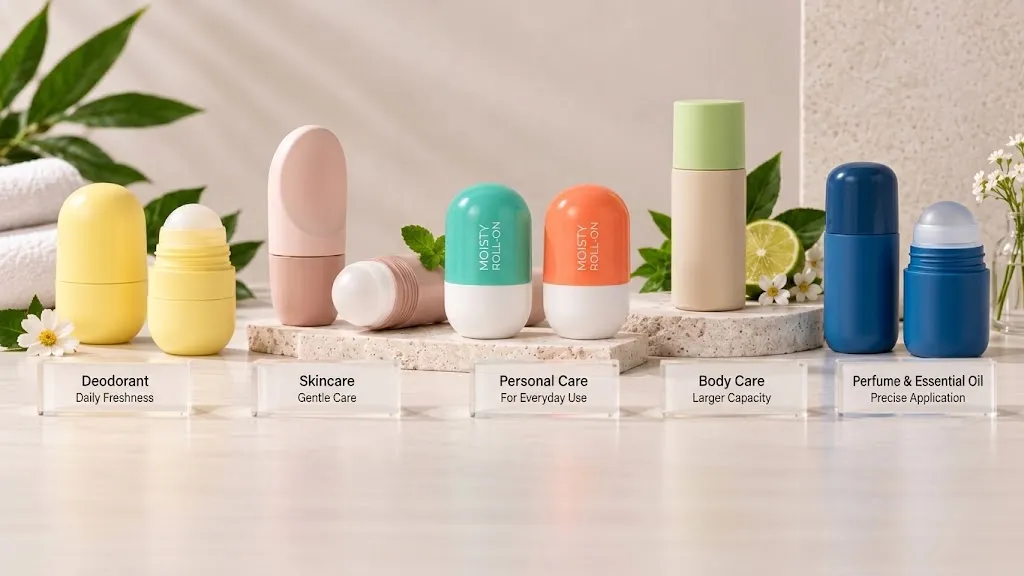
Roll-on packaging is used across a wide range of cosmetic and personal care applications.
Deodorants
Deodorant is one of the most established applications. The exposed ball provides direct skin contact and spreads liquid deodorant over a relatively broad area.
Perfumes and Essential Oils
Roll-on perfume bottles support localized application to points such as the wrist or neck. Essential oils can also use the format for direct, controlled application to a limited area.
Serums and Eye Care
Smaller roll-on bottles are used for eye serums, skincare products, and massage-style applications. Stainless steel balls may be selected when a brand wants a cooler or heavier application feel.
Hongda’s product documentation specifically identifies serums, eye care, massage, and premium personal care among common applications for stainless steel roller balls.
Other Personal Care Products
Roll-on packaging can also be used for nail care oil, anti-acne serum, hair tonic, massage products, anti-itch products, and refreshing formulas. Hongda’s application documentation includes these uses alongside essential oil, perfume, eye serum, and deodorant.
What Should Buyers Confirm Before Choosing a Roll-On Bottle?
Before requesting samples or confirming a production model, buyers should define the basic project requirements:
-
Product type and formula characteristics
-
Required filling volume
-
Bottle material
-
Ball material and diameter
-
Intended application area
-
Storage orientation
-
Color and decoration requirements
-
Target market and transportation method
-
Order quantity
These details help narrow the range of suitable standard products before detailed compatibility and production testing begins.
Hongda’s project-development guidance also recommends confirming target contents, dispensing requirements, structural route, materials, sealing conditions, compatibility, and mass-production requirements at the project initiation stage.
For projects requiring new structures, customized appearance, or component adaptation, buyers can review Hongda’s custom packaging development capabilities.
Roll-On Bottle Supply at Hongda Plastics
Hongda Plastics was established in 2003 and has focused on roll-on packaging for more than two decades. Its product range includes complete plastic, PET, and glass roll-on packaging sets, as well as bottles, balls, housings or fitments, and caps supplied separately.
The company also supports structure, color, logo, and mold customization and has practical experience with packaging matching and roll-on product development.
For buyers, the goal is to select a roll-on system that suits the formula, target market, application method, and production requirements rather than choosing a bottle by appearance alone.
FAQs
Q1: What Is a Roll-On Bottle?
A: A roll-on bottle is a smart container. It uses a rotating ball applicator to easily transfer liquid or semi-liquid formula directly to the warm skin or another application surface.
Q2: What Are the Main Parts of a Roll-On Bottle?
A: A standard, everyday roll-on package generally includes four main components: the bottom bottle, the round roll-on ball, the plastic housing or fitment, and the top cap.
Q3: What Products Can Be Used in Roll-On Bottles?
A: Common applications include underarm deodorants, nice perfumes, and relaxing essential oils. You can use it for face serums, eye care products, nail oils, massage products, and many other personal care formulas.
Q4: What Is the Difference Between Plastic, PET, and Glass Roll-On Bottles?
A: Plastic is very lightweight and super flexible for customization. PET offers great transparency with a much lower weight than glass. Meanwhile, heavy glass provides a much more premium feel but deeply increases the overall weight and the breakage risk.
Q5: How Do I Choose the Right Roll-On Bottle?
A: Start by looking at the formula type and the capacity. Pick the bottle material, the ball material, and the ball size. Think about the intended application, the drawer storage orientation, the decoration requirements, and the bumpy transportation conditions. Test samples and project-specific testing should always be confirmed before you start mass production.
For a brand new project, request smart packaging recommendations based directly on your formula, capacity, material, and application requirements.