EN



Custom Roll-On Packaging: From Design and Mold Development to Sampling and Mass Production
 2026-10-30
For custom roll-on packaging, the development sequence runs from the brief to structural design, 3D sampling, mold making and final sample confirmation. Customer approval comes before batch production. Keep a distinction between the approvals along that route. Signing off a shape tells the supplier something quite different from accepting the performance of a filled bottle.
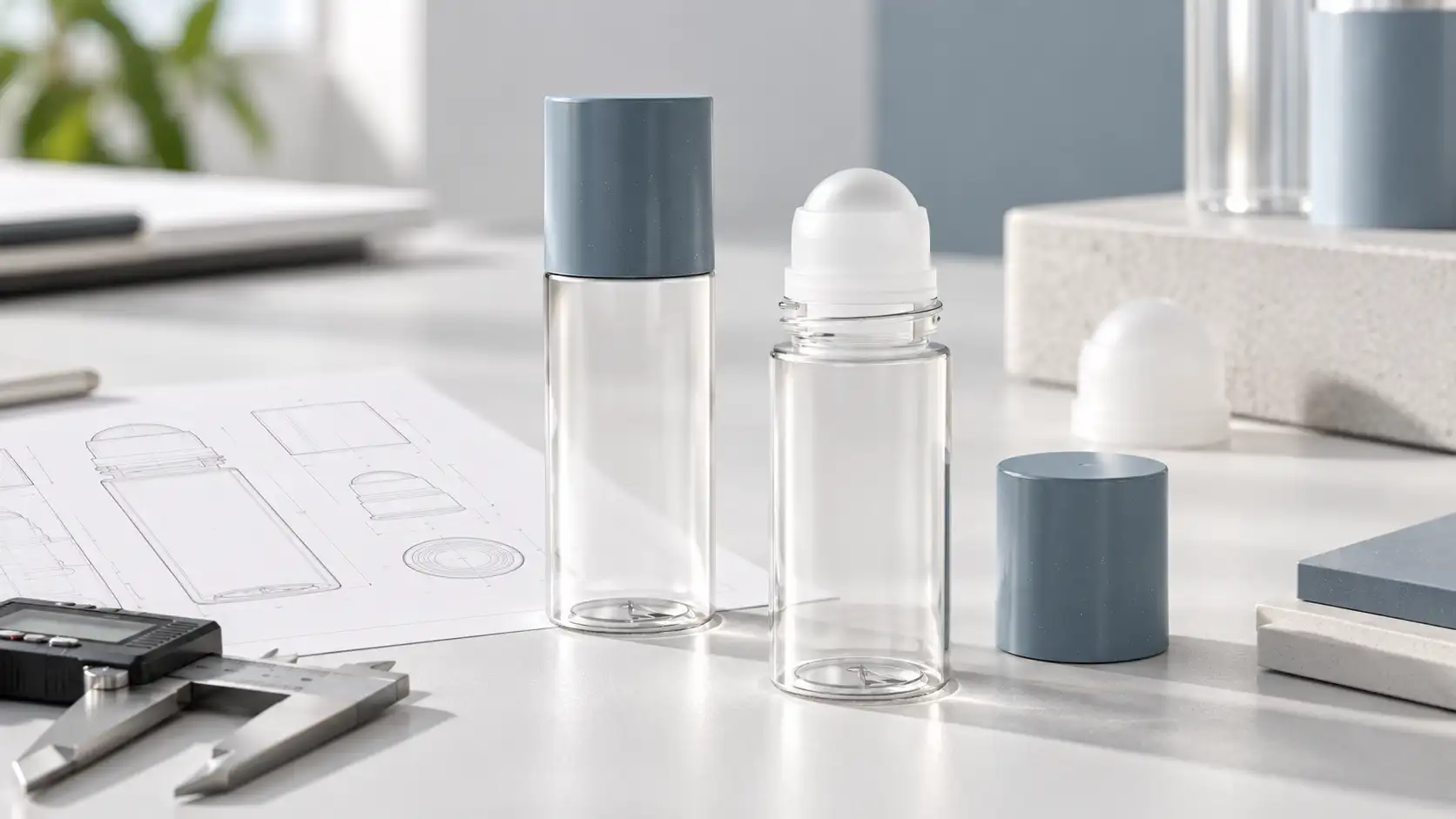
Have a look at the four parts on the drawing even if the artwork is already finished. The bottle, ball, fitment and cap all belong in the discussion with roll-on packaging manufacturers. Keep the launch date on the brief, but ask for the development and approval steps that lead up to it.
Start with the scope of customization
Look through existing roll-on bottle formats first. Is the capacity right? Does the material fit the proposal? Which part of the shape would you actually change? Take those answers into the brief. A request for a different color and a request for a different neck should be discussed separately.
Bring the color reference your designer is working from. Hongda accepts Pantone numbers, swatches or physical samples, and can discuss logos, colors, structure and molds. For a printed, sprayed or matte finish, send the artwork with the material and quantity requirements for assessment. The later color approval needs a physical reference too: confirm the final color sample or color limits before production.
Keep the visual references beside the engineering information. The swatch answers a color question. The neck drawing answers a dimensional one. Name the person who can approve each, especially where a designer, packaging buyer and contract filler are all involved. They do not have to sign off on the same things.
The brief also needs the intended contents. Give the formula type, viscosity, filling volume and direction of use, with your drawings, reference pack or concept. Describe what you want to assess in use: rolling feel and amount dispensed, for instance. Keeping an existing bottle? Include its neck drawing or send physical samples.
Review the structure before approving tooling
There is a reason to review the ball and fitment together. A tight clearance can mean resistance or sticking. Too much clearance can mean excessive output or leakage. Storage sealing brings other features into play, including cap pressure, the fitment lip, neck roundness and closing torque.
Work through the assembled drawing with the engineer. Circle the bottle-neck interface, ball diameter, fitment geometry and cap compression height. Put the proposed materials into the bill of materials. Then agree which dimensions will be checked by mold cavity and batch, what measurements will be recorded, and the acceptance criteria.
If you are changing components on an existing bottle, Hongda can assess the match from neck drawings or physical samples. That review covers dimensions and tolerances, insertion and pull-out forces, ball clearance and sealing. Keep the result with the drawing; approving a new outer shape does not answer those fit questions.
The engineering and customization review is the point to resolve structure and production-feasibility questions before authorizing mold work. Go through the parts one by one. Which need new tooling, and which stay as they are? Have the quotation identify the mold scope, samples, revision arrangements and ownership terms.
Read the tooling approval against a drawing revision. Does it cover the bottle only, or the cap and fitment too? How will a change requested after approval be priced and scheduled? Put the answers in writing. An unanswered item should remain visible when the approval goes back to the supplier.
Give each sample stage a clear job
Hongda can develop a custom pack from drawings, physical samples or a design concept, including structural design, 3D sampling, mold manufacturing and final sample confirmation. Its usual first-round 3D sample reference is 3–5 days. Use that stage to review appearance, dimensions and basic assembly; it cannot fully represent production materials or final sealing performance.
Once the mold is completed, mold samples are supplied for appearance, assembly, filling and performance tests. Batch production is arranged after customer confirmation. Keep a written distinction between approving the visual direction and approving the tested packaging combination.
|
Stage |
Main review |
Approval to record |
|
3D sample |
Appearance, dimensions and basic assembly |
Shape and structural revisions |
|
Mold sample |
Appearance, assembly, filling and performance |
Test results and required corrections |
|
Production release |
Confirmed sample and agreed specification |
Approved revision and order requirements |
For each round, return one set of comments tied to an identified sample. Mark the surface or dimension concerned. Explain what you noticed during assembly or use, including the formula and filling conditions for a rolling complaint. Where the correction needs another physical check, request a revised sample and keep the earlier comments beside it.
Test the filled pack before release
The contents belong in the test bottle. Use the actual formula at the expected fill volume whenever it can be provided. Its viscosity and flow matter, along with surface tension, chemical composition and temperature. If an empty-pack trial used water, record that limitation. It does not establish suitability for the formula you will sell.
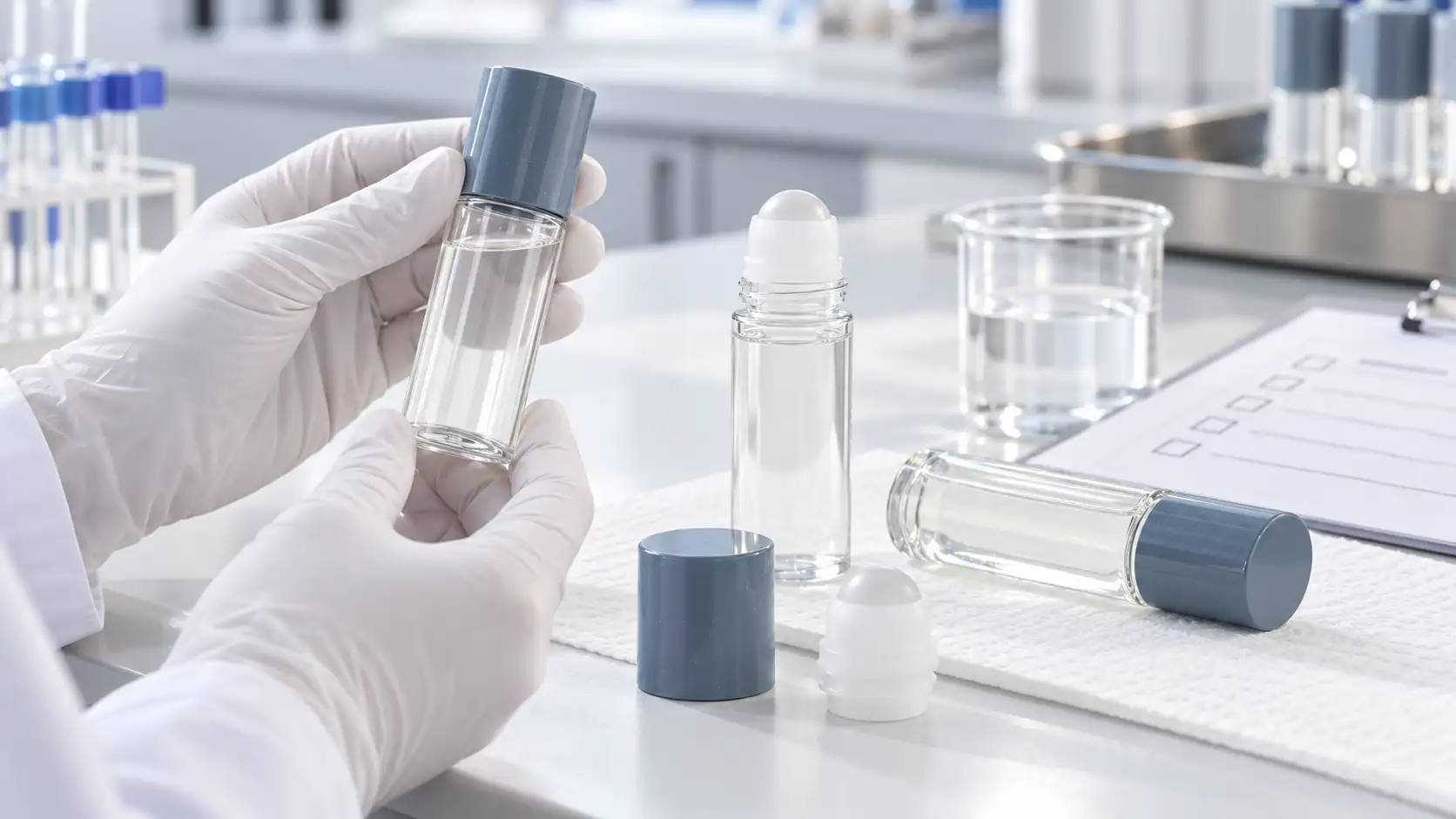
Try start-up and continued rolling at the angles and pressures relevant to use, including function after the agreed temperature exposures. Add side and inverted storage, opening and closing, and appropriate transport checks to the plan. Specify duration and pass criteria with the team. The release decision needs to refer back to those agreed checks.
The compatibility review extends to the bottle, ball and fitment. Look for relevant changes after formula contact, such as dimensional change, stress cracking, odor or color migration. At the filler, include fitment insertion, ball assembly, closing torque, splash or contamination, and leakage after assembly in the trial discussion.
Unable to send a formula sample? Prepare viscosity, density and formula type for Hongda, with a short video showing the liquid flowing. These are the requested inputs for that situation. Before the samples are dispatched, name the team that will fill and test them and the person who can approve the results.
Carry the approved sample into mass production
Pull the approved references together before releasing the order: drawing revision, bill of materials, color reference, artwork, sample identity and test requirements. Add the order quantity and shipping-pack requirements. Send the same version to the filler and packaging supplier, with obsolete versions clearly identified.
The QC team at Hongda operates separately from sales and production. Inspection takes place at incoming, pre-production, in-process and warehouse-entry stages. For an order discussion, bring it back to the actual pack: the dimensions to record, the appearance limits and the functional checks. Have the approved sample beside the specification when acceptance is discussed.
A resin, color, decoration or dimensional change belongs back on the review agenda. Check which earlier approvals still apply and what needs testing again. Record that decision with the new specification. Pay particular attention when the sample tested by the filler was from an earlier revision.
At shipment, request the inspection records you agreed to receive and check their order and specification references. A result outside an agreed limit needs a documented decision before batch acceptance. Keep those records available for the next order as well.
For an initial project discussion, send Hongda your design concept and formula requirements. Attach the artwork, quantity and launch timing, and say which parts you are buying. Hongda supplies complete sets and individual components. In the quotation, request a breakdown showing the tooling work, sample charges and production separately.
FAQ
Does custom roll-on packaging always need a new mold?
Check the existing drawing with the proposed change marked on it. Hongda handles color and decoration requests as well as structural development. Have the supplier identify any effect on the current components or tooling before approving a new mold; the word custom alone does not define the work.
How long does mold development take?
Hongda’s general reference for a typical mold-development project is 50–60 days. Discuss your own scope against that reference. Get a schedule that also accounts for the sample reviews, any corrections and customer approvals, with production and delivery dates confirmed for the order.
Are custom samples free?
Stock samples can usually be supplied free; the customer pays international courier costs. Custom colors, 3D samples and mold samples may carry project-specific charges. Ask which sample is being offered and what the charge includes.
When can mass production begin?
Customer confirmation of the final mold samples comes first; batch production is arranged afterwards. For new molds, colors or special decoration, the production schedule is confirmed for the project. A standard-product lead-time reference is not the whole timetable for developing and delivering a custom pack.